Botany


Photo:

Peppermint

©Wikipedia

Scientific Name:

Mentha piperita

Common Names:

Peppermint

Traditional Names:


Family:

Lamiaceae


Characteristics:

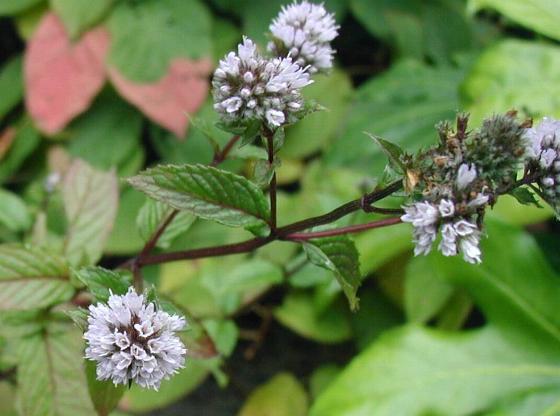
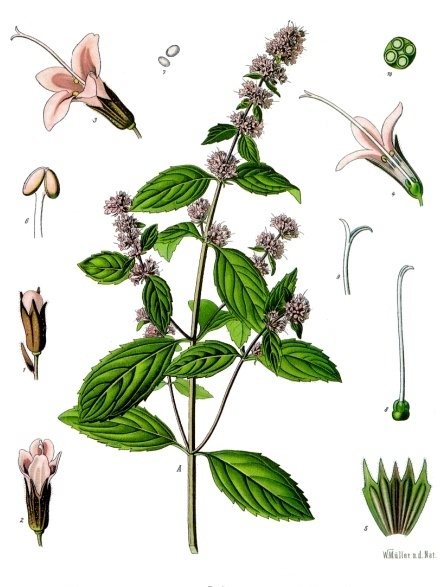
  • The plant is a perennial 50 to 90 cm high. The branched stems are normally glabrous and are often tinged violet. The leaves are short-petioled, oblong-ovate and serrate. The plant has over- and underground runners.
  • The flowers are false spikes with numerous inconspicuous bracts. The calyx is tubular with a ring of hair. The corolla is violet, and divided into four parts.


Habitat:

  • Common in Europe and the U.S., usually cultivated.


Medicinal


Parts Used:

  • The medicinal parts are the oil extracted from the aerial parts of the flowering plant, the dried leaves and flowering branch tips, the fresh flowering plant and the whole plant.


Collection and Harvesting:

  • Peppermint oil consists of the essential oil of Mentha piperita obtained by aqueous steam distillation from freshly harvested, flowering sprigs.
  • Peppermint leaves consist of the fresh or dried leaf.
  • Peppermint leaf is harvested several times a year. The maximum leaf harvest and highest oil content is shortly before the flowering season.
  • Peppermint should be stored cool and dry and protected from light in non-plastic containers.


Constituents:

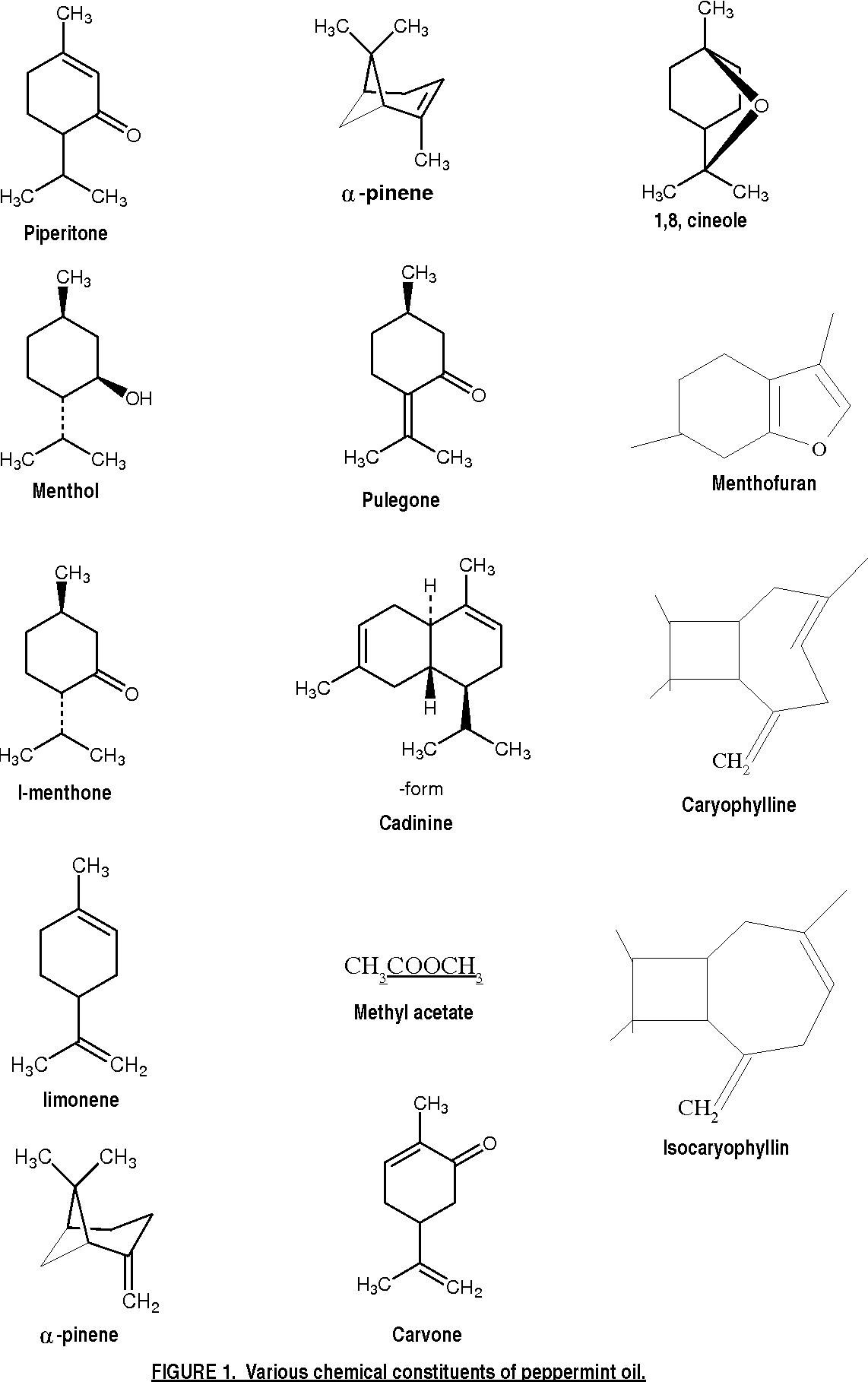
  • Peppermint essential oil contains menthol, menthone, and menthyl acetate, menthofuran, and 1,8-cineol. Peppermint oil also contains small amounts of many additional compounds including limonene, pulegone, caryophyllene and pinene, eriocitrin, hesperidin, and kaempferol 7-O-rutinoside.


Actions:

  • Carminative, anti-inflammatory, anti-spasmodic, aromatic, diaphoretic, anti-emetic, nervine, anti-microbial, analgesic.
  • The anti-spasmolytic effect appears to be due to its menthol, a calcium antagonist agent.


Indications:

  • Peppermint is used to combat flatulence and encourage bile and digestive juice flow.
  • It is used to relieve intestinal colic, flatulent dyspepsia and associated conditions.
  • The volatile oil acts as a mild anesthetic to the stomach wall, which dispels feelings of nausea and the desire to vomit.
  • It helps to morning sickness and motion sickness.
  • Peppermint can play a role in the treatment of ulcerative circumstances of the digestive system.
  • It is a conventional healing of fevers, colds and influenza.
  • Topically, pepperment is applied to insect bites, stings and itchy skin in general.
  • Other uses:
    • Infusion: Take for nausea, travel sickness, flatulence, colic, feverish conditions and migraines.
    • Tincture: Use for same conditions as infusion.
    • Compress: Soak a pad in the infusion to cool inflamed joints.
    • Inhalation: Put a few fresh leaves in boiling water and inhale to ease nasal congestion (avoid long-term use of oil as inhalent).
    • Massage oil: Dilute 5-10 drops peppermint oil in 25ml almond oil for headaches, fever, period pain or to relieve milk congestion when breast feeding.
    • Essential oil wash: Use 2-3 drops of oil in 10ml water for skin irritations, itching, burns, inflammations, scabies and ringworm.


Combinations:

  • Gypsy Cold Care Remedy: This combination of herbs will help the body perspire, which will help lower a fever. The tea can also be used to treat allergies, hay fever, and sinus congestion.
    • 1 part elder flower
    • 1 part peppermint leaf
    • 1 part yarrow flower and leaf
  • To make the tea blend: Prepare an infusion of the herbs, letting the herbs steep for 45 minutes, to make a very strong brew.
  • To use: Sip throughout the day as needed.


Preparation and Dosage:

  • As an infusion, pour a cup of boiling water onto a rounded teaspoonful of the dried herb and allow to infuse for 10 minutes. This tea can be drunk as often as needed.
  • Tincture (1:10) dosage is ½ - 1 tsp 3x a day
  • To prepare a tincture use 200 parts leaves in spirit of wine for 10 days (shaken at intervals), which is filtered after this time.
  • Tea dosage is 1 cup to be consumed 3 to 4 times a day between meals. Drink slowly in sips while warm.
  • Homeopathic dosage is 5 drops, 1 tablet or 10 globules every 30 to 60 minutes (acute) or 1 to 3 times a day (chronic); parenterally: acute - 1 to 2 ml, 3 times daily; chronic - once a day
  • Daily dosage of the essential oil is:
    • Internally 6 to 12 drops; inhalation, 3 to 4 drops in hot water; for irritable colon, daily dose: 0.6 ml; single dose: 0.2 ml in enteric coated form.
    • Externally, a few drops rubbed into the affected skin areas several times a day (2 to 4 times). For young children: Rub 5 to 15 drops on the chest and back. The drug is available as semi-solid and oily preparations (5 to 20%); aqueous-ethanol preparations (5 to 10%); nasal ointments with 1 to 5 essential oil.


Contraindications:

  • Peppermint leaves are contraindicated in cases of gallstones.
  • Peppermint oil is contraindicted for the internal administration of the drug in cases of occlusion of the biliary ducts, gallbladder inflammation and severe liver damage. Gallstone carriers could experience colic due to the cholagogic effect.


Drug Interactions:

  • May have interactions with Felodipine, Simvastatin, Cyclosporin, and drugs metabolised by cyp3a4 liver enzyme.


Additional


History and Origin:

  • The history of peppermint goes back to ancient Greece, where it is mentioned in a myth involving Pluto, one of the Greek gods. He had an affection for Minthe, a beautiful nymph. Persephone, Pluto's wife, cast a spell on Minthe which turned her into a plant. Pluto, unable to undo the spell, gave Minthe a sweet scent that would emanate through the garden.
  • The Pharisees paid their tithes with peppermint. Romans crowned themselves with wreaths made of it, and the Greeks used it in their temple rites.


Ethnobotany:

  • In folk use, peppermint is utilized for nausea, vomiting, morning sickness, respiratory infections, dysmenorrhea and colds.
  • The Chinese use Mentha arvensis, called bo he, as a cooling remedy for colds, fevers, sore throat and headache. They also consider it a liver herb, using it to move stagnant energy.
  • Ayurvedic physicians have used peppermint for centuries as a digestive tonic and a treatment for colds, coughs, and fever.
  • Hildegard of Bingen used peppermint to relieve indigestion and gout.
  • North American First Nations used peppermint to treat colds, coughts, and chest congestion. The Menominee used peppermint against pneumonia, the Cree used it to soothe sore throats, the Cherokee and Montagnais to relieve headache, the Delaware used it to relieve menstrual disorders.


Growing Information:

  • Peppermint succeeds in most soils and situations so long as the soil is not too dry. It grows well in heavy clay soils. A sunny position is best for the production of essential oils, but the plant also succeeds in partial shade. It prefers a slightly acid soil.
  • Peppermint is often grown in the herb garden and also commercially for its essential oil. The whole plant has a pleasant aroma of peppermint.
  • Most mints have fairly aggressive spreading roots and, unless you have the space to let them roam, they need to be restrained by some means such as planting them in containers that are buried in the soil.


Personal Impressions and Experiences:


Historical Botanical Illustrations:

Peppermint illustrations


1887 illustration from Köhlers; Medicinal Plants